
Applying for a Cellphone Contract in South Africa

1.
How to Apply for a Cellphone Contract Online
1. Choose Your Network and Deal
South Africa’s major providers—Vodacom, MTN, Telkom, Cell C—all allow online applications.
-
Visit their official websites and browse available handset + data/airtime bundles.
-
Many networks offer exclusive online-only deals, free delivery, or added data bonuses.
-
Compare monthly instalments, contract length (usually 24 months), and total costs before committing.
2. Complete the Online Application
-
Fill in your personal details (name, address, contact info).
-
Provide financial details (monthly income and expenses).
-
Upload scanned copies or clear photos of your supporting documents.
3. Credit Check
-
The provider will run a credit check to confirm that you can afford the monthly repayments.
-
If your credit score is too low, you may be asked for a deposit or offered a SIM-only contract instead of a handset deal.
4. Approval and Delivery
-
If approved, you’ll receive an approval confirmation via SMS or email.
-
The device and SIM card are usually delivered to your door within 2–5 working days (free delivery in most areas).
-
Some networks allow you to activate your SIM online, while others require a call to customer care.
5. Tips to Improve Your Chances
-
Make sure your credit record is clean (no unpaid loans or defaults).
-
Ensure your documents are up-to-date and in your own name.
-
Apply for a deal that matches your income bracket—networks often reject contracts that take up too high a portion of your salary.

2.
Eligibility Requirements
South African ID or passport.
Proof of income or employment (salary slips or bank statements for 3 months).
Proof of residential address (utility bill or bank statement).
Good credit history is usually required; some providers may perform a credit check.

3.
Affordability Tips
Only choose a contract you can afford monthly without financial strain.
Compare plans across providers for the same data, airtime, and SMS allowances.
Factor in additional costs like roaming, exceeding data limits, or late payment penalties.
Consider buying your own device separately; sometimes it’s cheaper than including it in a contract.
Review the contract length: shorter contracts offer flexibility but higher monthly fees; longer contracts may lock

4.
Best Practices
Read the fine print: Understand all fees, penalties, and overage charges.
Set up a debit order to avoid missed payments and penalties.
Track your data and airtime usage to avoid excess charges.
Ask about device insurance if you want coverage for loss or damage.
Review your plan annually to see if a cheaper or better option is available.
Keep your contract and proof of payment records safe.
5.
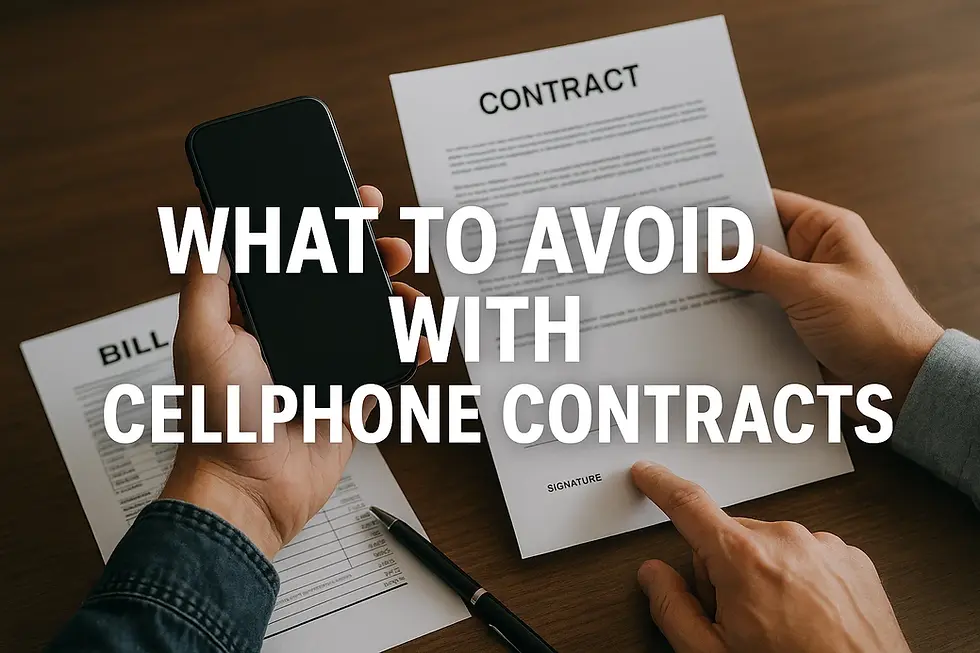
What to Avoid
Signing without comparing multiple providers and plans.
Choosing a plan solely because it offers a “free” phone. Hidden costs may make it expensive.
Ignoring your affordability; overcommitting can damage credit history.
Missing payments, which can incur penalties and negatively affect your credit score.
Not checking device condition or warranty if purchasing a phone as part of the contract.