
Requirements and Application for Student loans And Bursaries In South Africa
1.
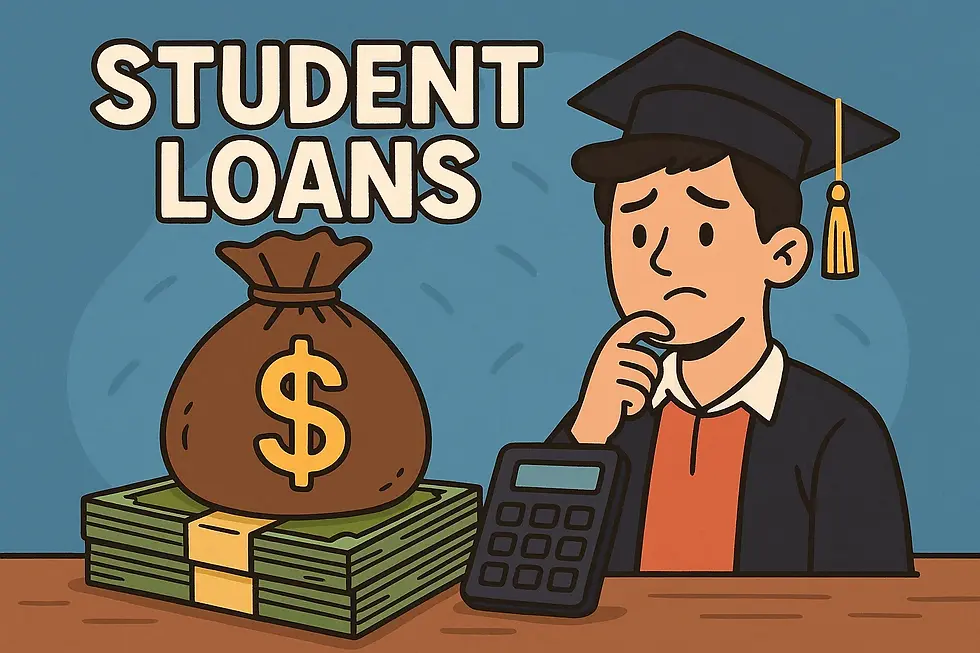
Student Loans
A student loan is money borrowed from a bank or financial institution to cover the costs of studying. You repay it over time with interest. Loans can cover:
-
Tuition fees
-
Textbooks and study material
-
Accommodation (in some cases)
-
Registration fees
1.1 Requirements for Bank Student Loans
Although each bank has its own criteria, most will require:
-
A South African ID (you must be a citizen or permanent resident).
-
Proof of enrolment at a recognised institution (acceptance or registration letter).
-
A parent/guardian/sponsor with income to sign as surety (since students usually don’t earn enough).
-
Recent payslips, bank statements, or proof of income from the surety.
-
Estimated cost of study (tuition invoice or fee schedule).
1.2 How Repayment Works
-
While you are studying, many banks only require you to pay interest each month.
-
After graduation, you begin paying back the capital + interest.
-
Interest rates are typically Prime + 1% to 3% (e.g., if prime is 11.75%, you could pay 12.75–14.75%).
-
Repayment periods usually range from 4–7 years, depending on the bank.

2.
Bursaries
A bursary is financial aid that does not need to be repaid, provided you meet the conditions. Many bursaries are awarded based on academic performance, financial need, or field of study.
2.1 Common Sources of Bursaries
-
Government departments (e.g. Department of Health, Department of Education).
-
Private companies and banks (often in return for working for them after graduation).
-
Universities and colleges (merit-based scholarships or financial aid offices).
-
NGOs and foundations.
2.2 Typical Bursary Requirements
-
South African ID
-
Strong academic record (some require minimum averages)
-
Proof of household income (to assess financial need)
-
Motivation letter or essay
-
Community involvement or extracurricular activities

3.
NSFAS (Government Student Aid)
The National Student Financial Aid Scheme (NSFAS) is the largest source of funding for low-income South African students.
3.1 Who Qualifies for NSFAS?
-
South African citizens with a household income below R350,000 per year (R600,000 for students with disabilities).
-
Must be accepted or registered at a public university or TVET college.
-
Must meet academic progress requirements.
3.2 What NSFAS Covers
-
Full tuition and registration fees
-
Accommodation (depending on institution)
-
Learning materials allowance (books, laptop in some cases)
-
Meal and transport allowances
3.3 How to Apply
-
Visit the official NSFAS website (www.nsfas.org.za).
-
Create a MyNSFAS account.
-
Submit personal and household information.
-
Upload documents:
-
Certified copy of ID
-
Parent/guardian income proof (or affidavit if unemployed)
-
Proof of registration/acceptance
-
-
Submit before the closing date (usually end of January for that academic year).
Compare your options

Usefull Resources
Add paragraph text. Click “Edit Text” to update the font, size and more. To change and reuse text themes, go to Site Styles.